





Premier DiV Table
First DIV Table
Pies, Pints & Penalty Spots is your front-row seat to the Jewson Western League!

From crunching tackles and cup celebrations to club projects and community moments, it’s all captured in one place. Scan the QR code, explore the galleries, and relive the passion, pride and people that make our league special
Matchday Mobility: Navigating the Responsibilities of Your Club Minibus
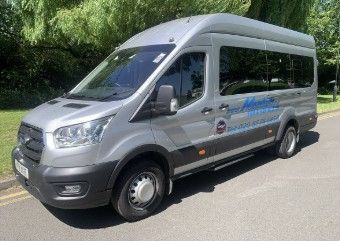
For many football clubs, the humble minibus is a game-changer, offering an affordable and flexible solution for matchday transport, particularly with the increasing travel demands for youth and senior teams alike. While hiring a 52-seater coach can now set you back over £1,000 for a trip to Cornwall, the minibus option often seems far more attractive. However, as convenient as they are, operating a club minibus comes with significant responsibilities, legal obligations, and a crucial "duty of care" that every club and driver must understand.
This article will break down the essential aspects of running your club minibus, from licensing to safety, ensuring your team travels safely, legally, and comfortably.
What is a Minibus?
First things first: a minibus is defined as a vehicle designed to carry 9 to 16 passengers plus the driver. If it carries fewer, it's considered a car; more, and it's a bus or coach.
Licensing and Permits
For football clubs, understanding the licensing requirements is paramount. If your club is a not-for-profit organisation, you do not need an operator's licence. This is a significant distinction, as operator licences are costly and typically for businesses that make a profit from transport.
If your passengers contribute to the fare or the cost of the minibus, even if it's just to cover expenses, you are required to obtain a Section 19 or Section 22 permit from your local authority. The Section 19 permit is the most common. These permits necessitate mandatory vehicle inspections and the maintenance of daily check records by the driver. A Section 19 permit costs around £11 per vehicle for 5 years and provides an exemption from needing to use a tachograph and having a Certificate of Professional Competence (CPC) holder to manage the vehicle.
If the minibus transport is genuinely and totally free – meaning neither the players contribute to the cost of the trip nor the driver receives payment (expenses are allowed for volunteers) – then no permit is required. However, this can be a grey area, especially if occasional drivers are reimbursed, which could lead to complications.
Your Duty of Care: Driver Qualifications
The responsibility for safe transport lies squarely with the minibus owner (your club) and the driver. This includes ensuring the driver is properly qualified, trained, and accredited.
Most drivers hold a standard 'B' car driving licence. If driving a minibus with this licence, specific conditions apply:
• Driving (of a minibus) is only allowed in the UK.
• The driver must be over 21 years old and have held a full driving licence for at least two years.
• Driving must not be for profit or payment, though expenses are allowed as a volunteer.
• No trailer can be towed.
• The vehicle's Maximum Authorised Mass (MAM) – total weight including passengers and equipment – must be below 3500kg. This limit increases to 4250kg if the minibus has been adapted for wheelchair users and the equipment is on board.
Drivers with a D1 licence (often obtained through 'grandfather rights' if passed before 1997) are generally not subject to these restrictions. Check for code 101 on the back of the licence, which indicates driving is "not for hire or reward".
Clubs must ensure their drivers have the appropriate licence. It's recommended to ask for a copy of their driving licence, potentially from the DVLA directly, to verify their qualifications. It's not uncommon for volunteers to believe they are licensed when they are not, or for their licence to have expired, which invalidates insurance.
Vehicle Maintenance and Safety
Before every journey, the driver must complete a daily inspection sheet, checking oils, waters, lights, tyres (for tread), seats, and seatbelts. These records are critical for due diligence and must be kept for 15 months.
Safety inspections should be carried out at intervals no greater than 10 weeks. If your vehicle covers more than 15,000 miles a year, these inspections should be carried out more frequently. Even though such checks are not mandatory for non-PSV operators, failure to undertake them could be used as evidence of negligence in the event of a liability claim. Remember operators have a legal duty of care to ensure the vehicles they operate are roadworthy .
If your minibus covers more than 15,000 miles per year, it requires a garage inspection every 10 weeks. If the vehicle is over 12 years old, these inspections are needed every 6 weeks. These are safety checks, similar to an MOT, ensuring the vehicle is in tip-top condition for carrying passengers. If your minibus has 12 or more seats, it requires a Class 5 MOT test, not a standard car MOT.
A law introduced in 2022 states that minibuses with only four wheels cannot have a tyre older than 10 years of age. This is a common oversight, especially with older buses, and can lead to condemnation.
The Road Traffic Act 1988, as amended, places a duty of care on both operators and drivers making them guilty of an offence if they use, cause or permit another to use, a motor vehicle or trailer on a road in a manner which is likely to cause a danger of injury to any person .
The Weighty Issue of Overloading
One of the biggest concerns for football clubs is weight. Maximum Authorised Mass (MAM) is the total maximum weight the vehicle is authorised to be on the highway, including the vehicle itself, passengers, and all equipment. For B licence holders, this is typically 3500kg (4250kg for wheelchair-adapted vehicles).
An average Peugeot Boxer minibus has an unladen weight of 2000-2600kg. If you factor in 16 passengers at the industry average of 75kg (which is now below the UK male average of 82kg), plus kit bags (which get heavier if wet), you can quickly approach or exceed the 3500kg limit.
• Example: A 2200kg unladen minibus + 16 passengers (75kg each = 1200kg) + 10kg kit + 15kg wet kit = 3425kg. This leaves very little margin, especially if your players weigh more than 75kg.
Being overweight can lead to the vehicle being impounded and prohibited from driving. It’s easy for teams, especially rugby teams with strapping players, to exceed safe limits. The unladen weight or mass in service can be found in section G of the V5 registration document The VIN Plate will show the MAM for the vehicle, 2nd figure in the column. Be aware that the same model of minibus can have different MAMs.
If you're considering purchasing a minibus, look for one adapted to take a wheelchair, as these often have a higher payload capacity, allowing for potential overloading. Military minibuses, for instance, often have fewer seats to account for the weight of soldiers and their gear.
Other Critical Considerations
Beyond the basics, several other factors contribute to safety and legality. Doorways, exits, and corridors between seats must be kept clear. Luggage, especially if all seats are filled, often blocks these crucial escape routes. All loose items must be strapped down to prevent them becoming missiles in an accident.
Seatbelts must be worn by all passengers if fitted. The driver is responsible for ensuring passengers under 14 wear their seatbelts and can be fined if they don't. While passengers over 14 are legally responsible for themselves, the driver still has a duty of care, especially if transporting under 18s. Minibuses are often fitted with "all-age" seatbelts that can be adjusted for smaller individuals.
Drivers have a duty of care to drop off passengers on the correct side of the road (the near side), even if it means turning the vehicle around. For long journeys, particularly when a player is driving after a game, driver fatigue is a serious concern. Consider a second driver for extensive trips, just as schools should for theatre trips.
MiDAS Training: Your Safety Net
Given these complexities, investing in proper driver training is not just good practice, it's essential. MiDAS (Minibus Driver Awareness Scheme) is a nationally recognised standard highly recommended by the Department for Education and Department for Transport.
MiDAS training enhances both driving and safety standards, can lead to lower insurance premiums, increases driver confidence and competence, and helps clubs comply with Section 19/22 permit requirements.
While the cost implications of transport are a reality for football clubs, cutting corners on safety and legality by relying on untrained volunteers or overloaded vehicles is a risk not worth taking. Taking responsibility for your club's minibus operations is like preparing your pitch for a big match: you wouldn't send your team out on a dangerous, unkempt field, so don't send them out in an unsafe or non-compliant vehicle. Invest in proper training and maintenance to ensure every journey is a win for safety.


