


Premier DiV Table
First DIV Table
Pies, Pints & Penalty Spots is your front-row seat to the Jewson Western League!

From crunching tackles and cup celebrations to club projects and community moments, it’s all captured in one place. Scan the QR code, explore the galleries, and relive the passion, pride and people that make our league special
2024/5 SEASON REVIEW
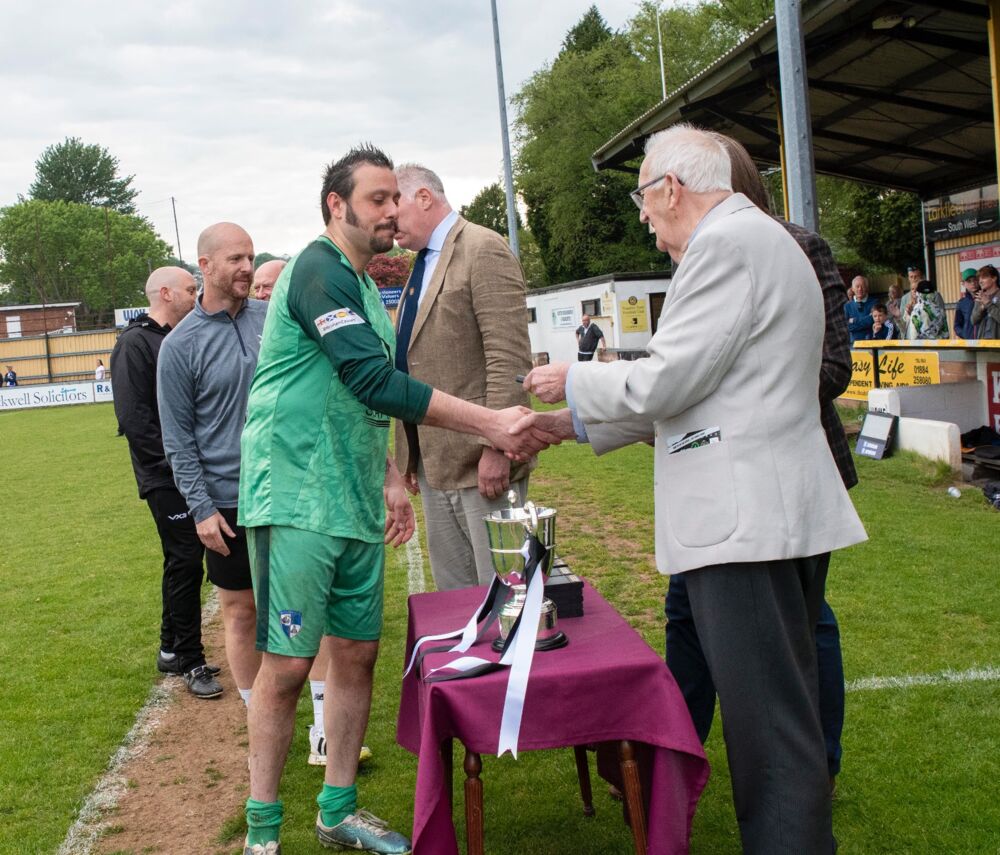
As the curtains close on another Jewson Western League season, it's time to reflect on the drama, triumphs, and challenges that unfolded across the Premier and First Divisions. The league, with its mix of experienced clubs and ambitious newcomers, proved to be as competitive as ever.
Premier Division: Portishead's Unstoppable Rise
The Premier Division title race was a compelling narrative. Portishead Town emerged as champions, a remarkable achievement for a club that had only been promoted from the First Division, the previous season. Manager Kye Mountford admitted their success was "totally unexpected" and winning the league wasn't initially the objective; stability was the focus. Portishead built significant momentum over the season, particularly after a loss to Street on New Year's Day, which spurred them to "another level". Despite early challenges, including playing their first 10 games away from home, they were consistently seen as a strong side with a high-tempo style of football. Key players like Ethan Feltham and Jay Murray contributed significantly with their goals. Portishead didn't just win the league; they also completed a league and cup double by winning the Les Phillips Cup, a feat Mountford called "ridiculous" given the competitive nature of the league.
Clevedon Town were widely considered strong contenders and even "favourites" for much of the season. They were praised as a "great side, with a top manager and an unbelievable amount of experience", by fellow managers. Their battles with Portishead, including two league games and two cup games, were of "high quality". Despite their strong showing and pedigree, Clevedon ultimately finished as runners-up and were defeated in the playoff final.
Playoff Drama and Promotion Aspirations
Beyond the automatic promotion spot claimed by Portishead, the Premier Division playoffs provided intense drama. The format saw the 2nd placed team face the 5th and the 3rd face the 4th in semi-finals, with the winners progressing to the final. Brixham were the eventual playoff champions. Their journey has been described as a "meteoric rise," achieving their fourth promotion in 13 years, reaching Step 4 after just two seasons in the Western League. Joint Manager Jason Couch was "over the moon" with the victory. Brixham's season saw peaks and troughs, attributed partly to a smaller squad and availability issues, but they delivered when it mattered, winning the playoff final away at Clevedon Town. The clubs supporters are “buzzing” and excited about the prospect of Southern League travel.
In the First Division, the title went to Halen, who weren't widely tipped at the start but achieved promotion by quietly going about their business. Manager Karl Baggaley noted they surpassed their initial targets. Bradford Town, who at one point challenged for the title but "fell away," found themselves scrapping for a playoff spot. They ultimately won the First Division playoffs, a victory built on a solid performance and the squad's experience. Manager Chris Carr described the season's ups and downs as "wild" and a "crazy couple of months". Despite inconsistent form earlier, including "horrific results," the quality was always there and returned when the squad became more consistent.
Teams Reflect and Look Ahead
Many clubs reflected on their season's journey and looked towards the future. Street finished 7th in the Premier Division, having ambitions for a playoff place. Their season was viewed as a rebuilding project, with improvements both on and off the pitch. They were seen as a potential "dark horse for the playoffs" after recruiting well. The club greatly appreciates its supporters, who were involved in events like the "March to the Mallet," a highlight of the season.
Teams lower down the table also saw progress. Saltash United finished 14th, adding 10 points to their previous season's total, indicating progression. Manager Macka Brown noted a turbulent start but "playoff form" since December, despite struggling with injuries to key players like Ricky Sheppard. Odd Down (17th) aimed to avoid relegation and achieved a good run of form under new manager Jamie Walter, who focused on boosting player belief. The club hopes to return to the Premier Division eventually.
Welton Rovers faced a particularly difficult season, being on their third management team by November. Managers Angus Young and Bill Wheeler inherited a depleted squad but worked to improve performances and secured their first win as a the new management team after 12 games. They acknowledge the increased competitiveness of the Premier Division and the crucial role of supporters.
Other clubs like Ivybridge Town (9th) and St. Blazey (18th) saw their season as a learning curve. Ivybridge manager Wayne Gamble noted they needed to be more consistent and manage games better after drawing too many. St. Blazey manager Mark Carter focused on stability and integrating the club's teams, with South West Sports News, Ross Reed, identifying them as a potential "dark horse" for next season. Torpoint, benefiting from their geography and returning personnel, finished the season strongly and manager Ryan Fice highlighted the importance of trust and confidence built by a settled group of good players and people.
Challenges and
As the curtains close on another Jewson Western League season, it's time to reflect on the drama, triumphs, and challenges that unfolded across the Premier and First Divisions. The league, with its mix of experienced clubs and ambitious newcomers, proved to be as competitive as ever.
Premier Division: Portishead's Unstoppable Rise
The Premier Division title race was a compelling narrative. Portishead Town emerged as champions, a remarkable achievement for a club that had only been promoted from the First Division, the previous season. Manager Kye Mountford admitted their success was "totally unexpected" and winning the league wasn't initially the objective; stability was the focus. Portishead built significant momentum over the season, particularly after a loss to Street on New Year's Day, which spurred them to "another level". Despite early challenges, including playing their first 10 games away from home, they were consistently seen as a strong side with a high-tempo style of football. Key players like Ethan Feltham and Jay Murray contributed significantly with their goals. Portishead didn't just win the league; they also completed a league and cup double by winning the Les Phillips Cup, a feat Mountford called "ridiculous" given the competitive nature of the league.
Clevedon Town were widely considered strong contenders and even "favourites" for much of the season. They were praised as a "great side, with a top manager and an unbelievable amount of experience", by fellow managers. Their battles with Portishead, including two league games and two cup games, were of "high quality". Despite their strong showing and pedigree, Clevedon ultimately finished as runners-up and were defeated in the playoff final.
Playoff Drama and Promotion Aspirations
Beyond the automatic promotion spot claimed by Portishead, the Premier Division playoffs provided intense drama. The format saw the 2nd placed team face the 5th and the 3rd face the 4th in semi-finals, with the winners progressing to the final. Brixham were the eventual playoff champions. Their journey has been described as a "meteoric rise," achieving their fourth promotion in 13 years, reaching Step 4 after just two seasons in the Western League. Joint Manager Jason Couch was "over the moon" with the victory. Brixham's season saw peaks and troughs, attributed partly to a smaller squad and availability issues, but they delivered when it mattered, winning the playoff final away at Clevedon Town. The clubs supporters are “buzzing” and excited about the prospect of Southern League travel.
In the First Division, the title went to Halen, who weren't widely tipped at the start but achieved promotion by quietly going about their business. Manager Karl Baggaley noted they surpassed their initial targets. Bradford Town, who at one point challenged for the title but "fell away," found themselves scrapping for a playoff spot. They ultimately won the First Division playoffs, a victory built on a solid performance and the squad's experience. Manager Chris Carr described the season's ups and downs as "wild" and a "crazy couple of months". Despite inconsistent form earlier, including "horrific results," the quality was always there and returned when the squad became more consistent.
Teams Reflect and Look Ahead
Many clubs reflected on their season's journey and looked towards the future. Street finished 7th in the Premier Division, having ambitions for a playoff place. Their season was viewed as a rebuilding project, with improvements both on and off the pitch. They were seen as a potential "dark horse for the playoffs" after recruiting well. The club greatly appreciates its supporters, who were involved in events like the "March to the Mallet," a highlight of the season.
Teams lower down the table also saw progress. Saltash United finished 14th, adding 10 points to their previous season's total, indicating progression. Manager Macka Brown noted a turbulent start but "playoff form" since December, despite struggling with injuries to key players like Ricky Sheppard. Odd Down (17th) aimed to avoid relegation and achieved a good run of form under new manager Jamie Walter, who focused on boosting player belief. The club hopes to return to the Premier Division eventually.
Welton Rovers faced a particularly difficult season, being on their third management team by November. Managers Angus Young and Bill Wheeler inherited a depleted squad but worked to improve performances and secured their first win as a the new management team after 12 games. They acknowledge the increased competitiveness of the Premier Division and the crucial role of supporters.
Other clubs like Ivybridge Town (9th) and St. Blazey (18th) saw their season as a learning curve. Ivybridge manager Wayne Gamble noted they needed to be more consistent and manage games better after drawing too many. St. Blazey manager Mark Carter focused on stability and integrating the club's teams, with South West Sports News, Ross Reed, identifying them as a potential "dark horse" for next season. Torpoint, benefiting from their geography and returning personnel, finished the season strongly and manager Ryan Fice highlighted the importance of trust and confidence built by a settled group of good players and people.
Challenges and Community Spirit
Managers across the league spoke about the numerous challenges faced at this level, including weather-related postponements, which complicate planning and momentum. Injuries and suspensions and general player availability due to work or holidays significantly impact squad consistency. The hard work required from volunteers was frequently highlighted.
Despite the challenges, the community aspect of the Western League thrives. The positive use of social media by clubs is appreciated, providing valuable information, including pitch inspections, which helps groundhoppers and fans travel to games. Local journalists and the Jewson Western League Podcast play a key role in covering the league and highlighting the efforts of those involved. Events like the March to the Mallet exemplify the strong connection between clubs and their supporters.
As Portishead Town and Brixham prepare for the Southern League, and Hallen and Bradford Town look forward to Step 5, the rest of the league will learn from the past season and gear up for the next. The emphasis on progression, retaining core players, and making key signings will be crucial for teams aiming to challenge higher up the tables in 2025/26. The season confirmed the Western League's status as a competitive and compelling league, driven by passionate individuals on and off the pitch.
Community Spirit
Managers across the league spoke about the numerous challenges faced at this level, including weather-related postponements, which complicate planning and momentum. Injuries and suspensions and general player availability due to work or holidays significantly impact squad consistency. The hard work required from volunteers was frequently highlighted.
Despite the challenges, the community aspect of the Western League thrives. The positive use of social media by clubs is appreciated, providing valuable information, including pitch inspections, which helps groundhoppers and fans travel to games. Local journalists and the Jewson Western League Podcast play a key role in covering the league and highlighting the efforts of those involved. Events like the March to the Mallet exemplify the strong connection between clubs and their supporters.
As Portishead Town and Brixham prepare for the Southern League, and Hallen and Bradford Town look forward to Step 5, the rest of the league will learn from the past season and gear up for the next. The emphasis on progression, retaining core players, and making key signings will be crucial for teams aiming to challenge higher up the tables in 2025/26. The season confirmed the Western League's status as a competitive and compelling league, driven by passionate individuals on and off the pitch.


